
Contents
- 1How the five days fit together
- 2Day 1: Angkor Wat and the pass
- 3Day 2: Angkor Thom and the Bayon
- 4Day 3: Ta Prohm and the Grand Circuit
- 5Day 4: Banteay Srei and Kbal Spean, or Phnom Kulen
- 6Day 5: the Roluos group and the Tonle Sap
- 7Midday: where to eat and rest
- 8Practicalities
- 9A faster three, a slower five, and with children
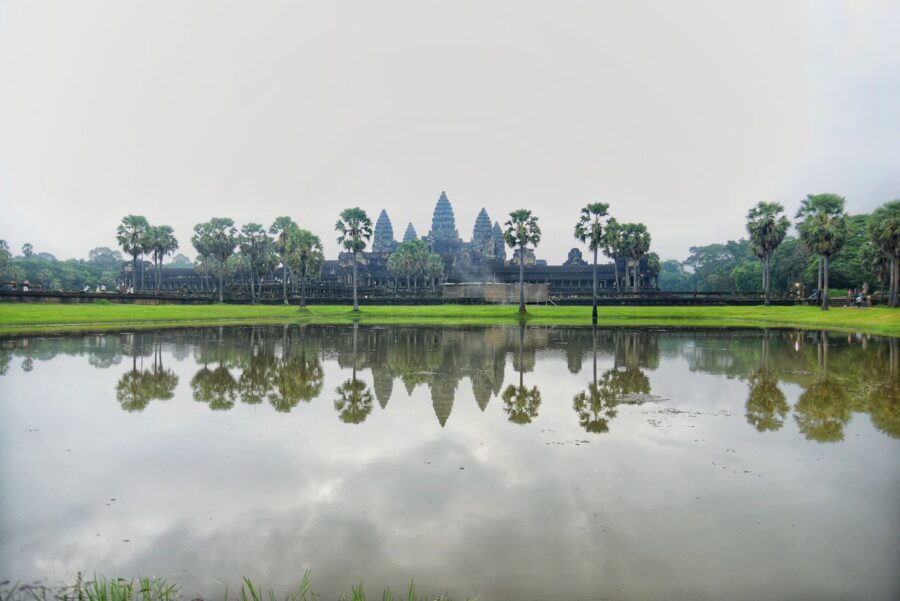
Angkor Wat faces west, and that one fact settles more of a five-day plan than anything else. The towers stand black against the dawn and glow gold in the late afternoon, while most of the other great temples face east and want the morning. Build the days around the sun and the coach timetables, and Angkor becomes a far quieter place than its reputation.
Five days and four nights is enough to see the park properly: Angkor Wat, the walled city of Angkor Thom, the jungle temples and the Grand Circuit, then two days beyond for Banteay Srei and Kbal Spean or Phnom Kulen, the first capital at Roluos and the Tonle Sap. Below are the times for each day, the pass to buy, how to get about, where to sit out the midday heat, and a faster and a slower version.
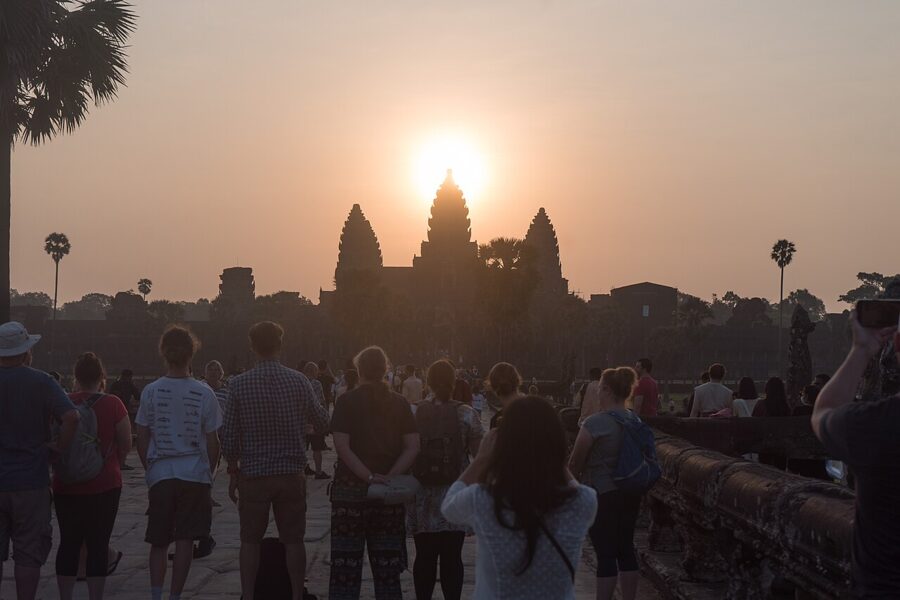

The order matters less than the hour. A temple seen at 6.30am with a handful of people is not the same place at 10am with three tour groups and the heat coming off the stone.



How the five days fit together
Which pass to buy
Buy the 7-day pass. Four of the five days here use the Angkor Pass (Roluos and Banteay Srei are covered), and a 3-day pass plus a 1-day pass costs more than one 7-day pass. It also gives you slack for a rained-off morning, because you have 30 days to use its seven.
| Pass | Price (as of November 2026) | Days to use it in | Notes |
|---|---|---|---|
| 1 day | US$37 | the date on the ticket | No photo needed |
| 3 days | US$62 | any 3 days within 7 | Photo needed |
| 7 days | US$72 | any 7 days within 30 | Photo needed |
Those are the prices and windows on the Angkor Enterprise ticket page, and Angkor Enterprise is the only seller: a pass bought anywhere else is not valid. You can buy online, at a kiosk, or at the ticket office on Road 60, about 4 km (2.5 miles) from the centre of Siem Reap. Buying online the day before spares you the counter in the dark on your first sunrise.
Two rules in the Angkor Enterprise FAQs are worth knowing. A ticket for tomorrow bought after 4.45pm also lets you in that evening for sunset. And the FAQ describes the 1-day pass in terms of the Small Circuit, listing the Grand Circuit temples under the 3-day and 7-day passes. Children under 12 need no ticket but should carry a passport to prove their age.
The order, and why
Day 1 is Angkor Wat in the afternoon, when its west front is lit. Day 2 starts with sunrise there and goes straight on to the Bayon before the groups. Day 3 begins at Srah Srang and Ta Prohm at dawn and ends the Grand Circuit at sunset. Days 4 and 5 leave the central park, north to Banteay Srei and Kbal Spean (or Phnom Kulen), then south-east to Roluos and the lake.
Coach tours run to a fixed rhythm: sunrise at Angkor Wat, the Bayon and Ta Prohm mid-morning, Angkor Wat again after lunch. Swap the halves of that pattern and you spend five days half a step out of phase with everyone else. Numbers are lower anyway: Angkor Enterprise sold 474,993 passes to foreigners from January to August 2026, down 29% on 2025, according to its September report.
Getting around: tuk-tuk, car, bicycle, e-bike
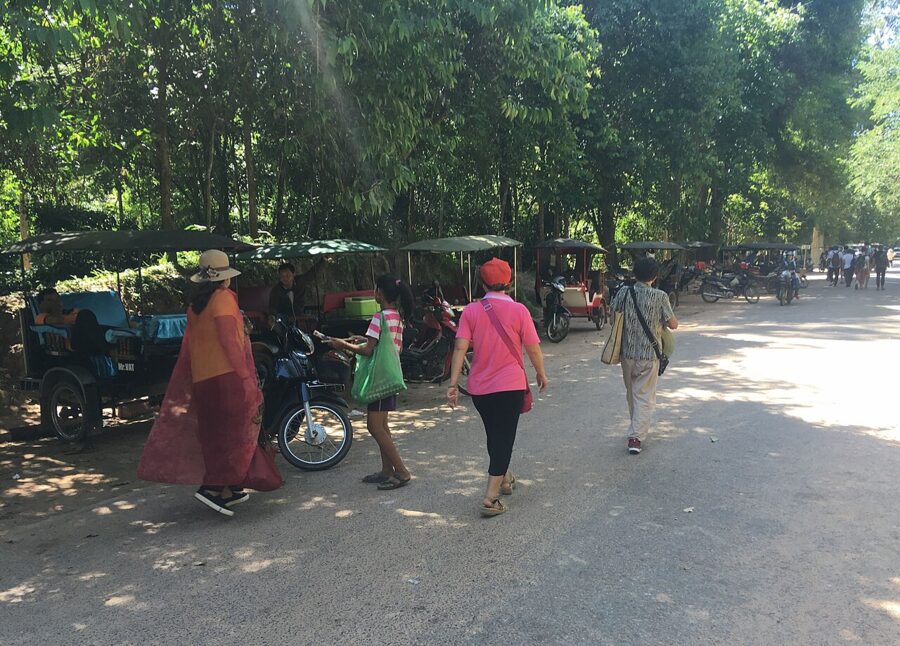
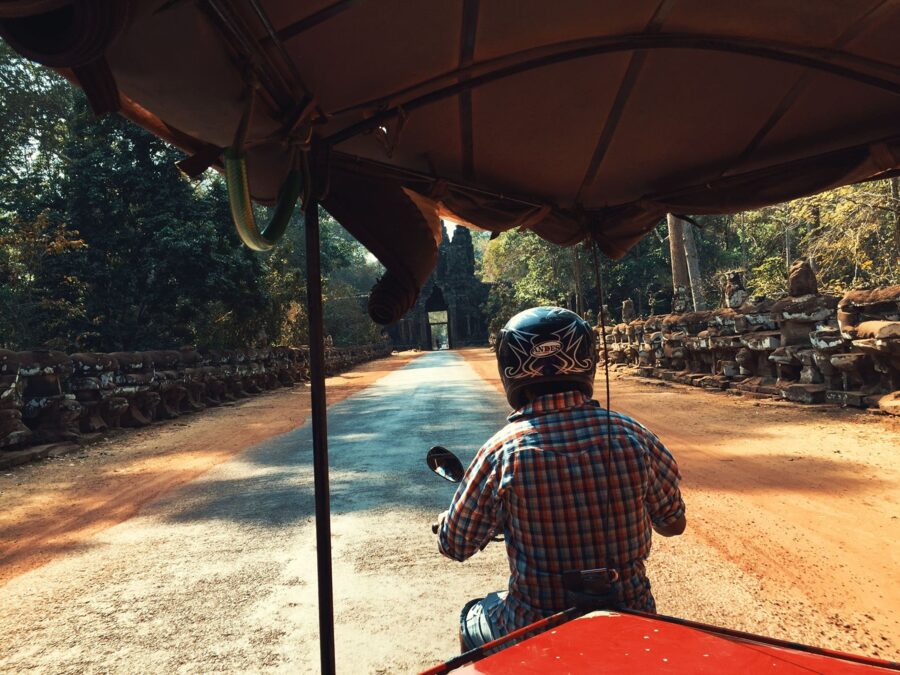
A tuk-tuk hired by the day is the usual answer and the right one here: the driver waits at each temple and the canopy gives enough shade. Agree the route, the start time and the price the evening before, as a 4.45am pickup costs more than a 7am one. Grab and PassApp both work for short hops in town.
| Day | Rough rate quoted in 2026 | Best by |
|---|---|---|
| Small Circuit (days 1 and 2) | US$15–20 by tuk-tuk | tuk-tuk or bicycle |
| Grand Circuit with Ta Prohm (day 3) | US$20–25 by tuk-tuk | tuk-tuk |
| Banteay Srei and Kbal Spean (day 4) | US$25–35 by tuk-tuk, more with Kbal Spean | tuk-tuk or car |
| Phnom Kulen (day 4 option) | roughly US$40–80 for a car with driver | car |
| Roluos and a lake village (day 5) | agree a day rate; Chong Kneas alone is US$3–4 each way | tuk-tuk |
These are drivers’ going rates, not a tariff. A car with air conditioning earns its price on the long roads to Kbal Spean and Kulen, and for anyone who wilts in the heat.
Cycling suits the Small Circuit: Angkor Wat is about 6 km (4 miles) north of town on a flat, shaded road. E-bikes are rented by the day in town; ask about battery range before anything longer, and be back before dark, as the park roads are unlit. Angkor Enterprise says you may also ride a scooter yourself.

Day 1: Angkor Wat and the pass
Keep the morning for arriving and buying the pass online; Siem Reap Angkor International Airport is about an hour’s drive east of town. Eat early and leave for the temple at about 2pm.
Walk in by the western causeway with the sun behind you. Angkor Wat was built under Suryavarman II in the first half of the 12th century and dedicated to Vishnu, and its west-facing plan, unusual at Angkor, is one reason scholars have argued over whether it was also the king’s funerary temple. Whatever the reason, the outer galleries read best in the afternoon.
Go up to the Bakan, the central upper level, first (about 7.40am to 5pm as reported in late 2026, closed on Buddhist holy days). The stairs are steep, children under 12 are not allowed up, and the guards turn back bare shoulders and knees.
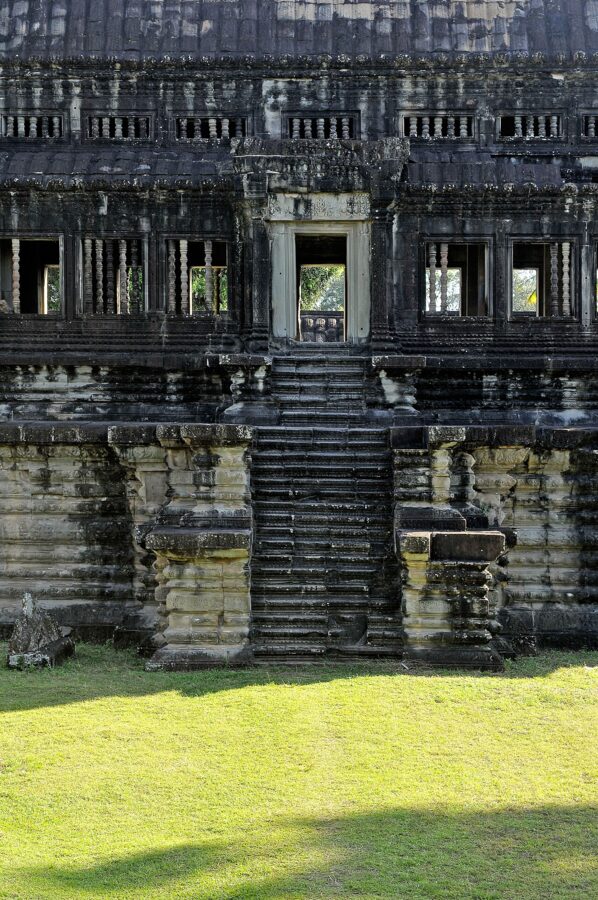

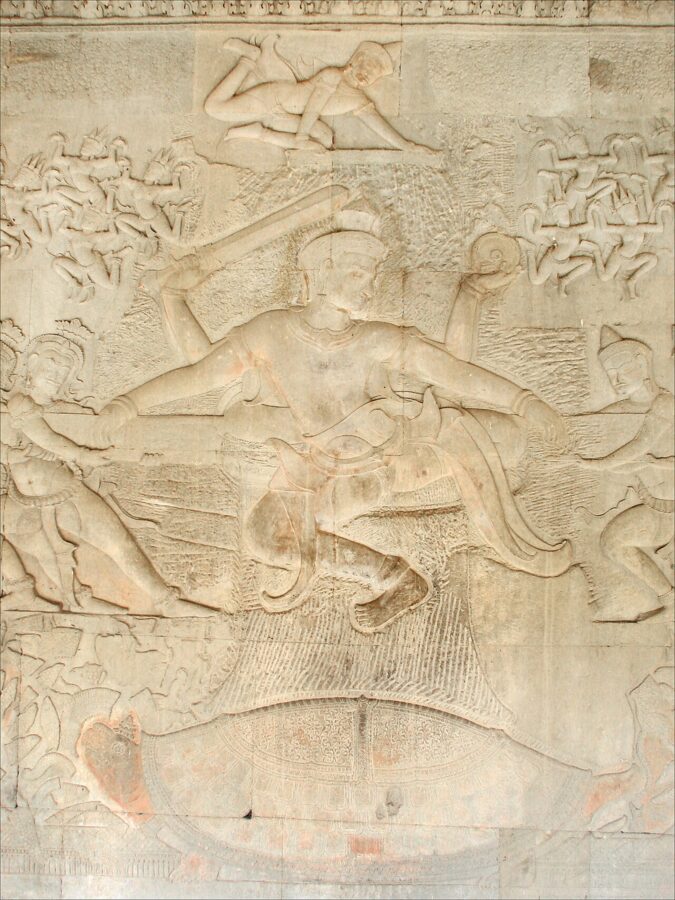
Then spend the last two hours in the outer gallery, walking anticlockwise from the west entrance: the Battle of Kurukshetra, Suryavarman II reviewing his army under parasols, the heavens and hells. The one not to miss is on the southern half of the east gallery, the Churning of the Ocean of Milk, close to 50 m long.

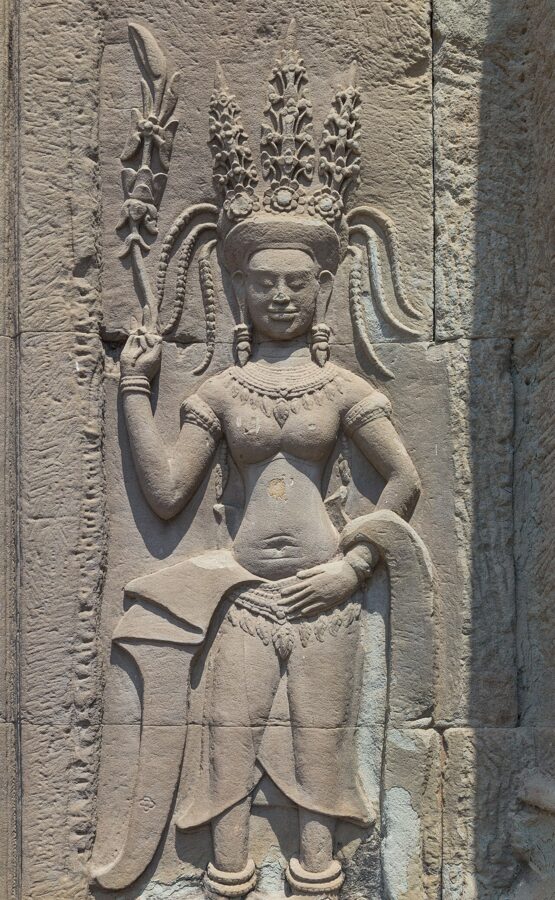
On the way out, look at the walls rather than the towers. Angkor Wat carries well over a thousand carved devatas, female divinities in pairs and groups on almost every surface, and no two wear quite the same headdress.

For sunset, stay. Walk back along the causeway as the light drops and turn round beyond the moat; the whole west front goes amber. Angkor Wat closes at about 5.30pm or 6pm (sources differ), so leave before the guards clear the courts.
Day 2: Angkor Thom and the Bayon
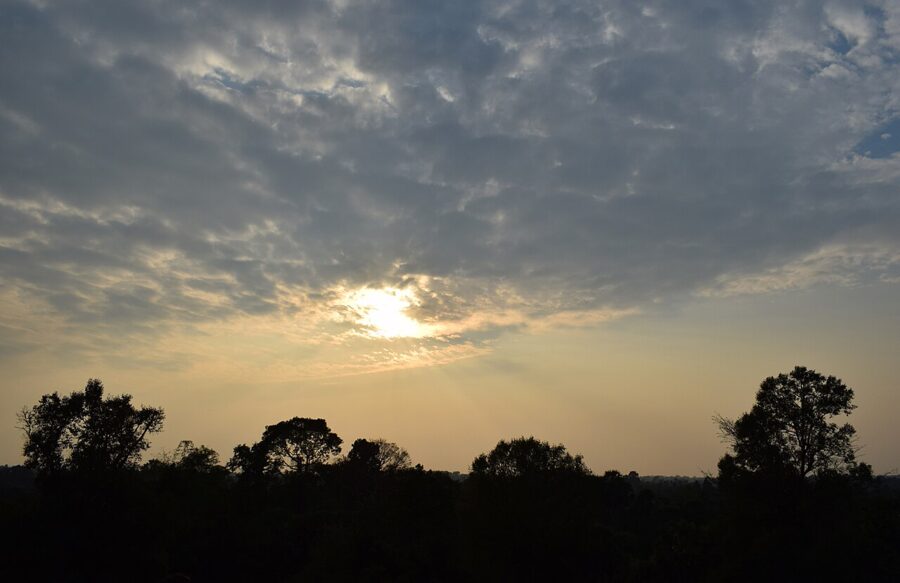
Your tuk-tuk will want to leave at about 4.45am. The park gates and Angkor Wat open at 5am, and the sun rises behind the towers at roughly 5.30am to 6.20am depending on the season. Walk to the north pond, on the left inside the west entrance.
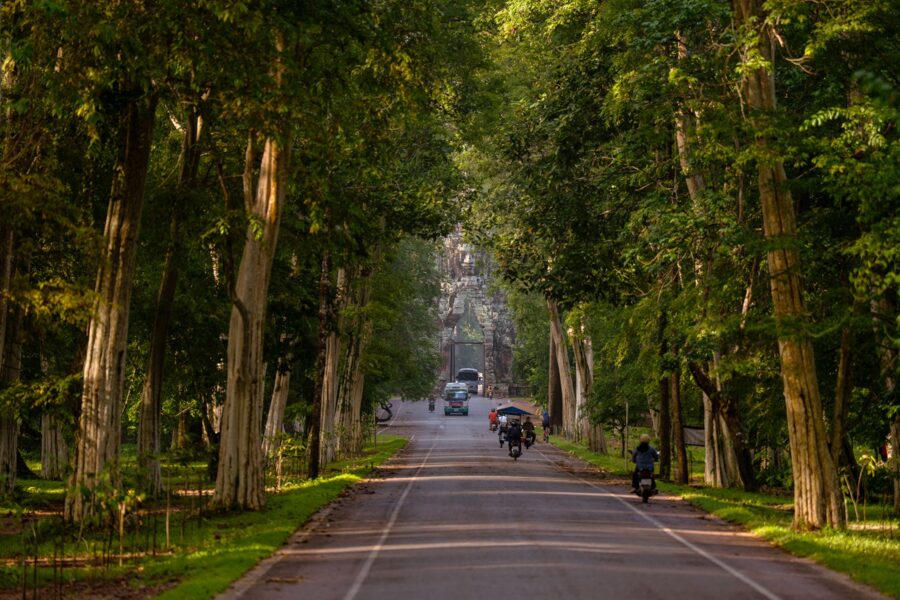
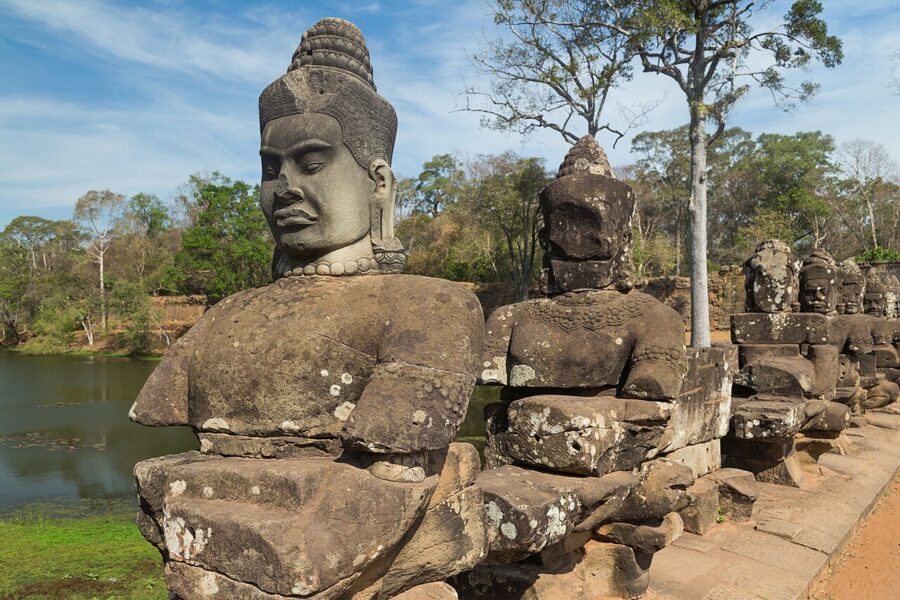
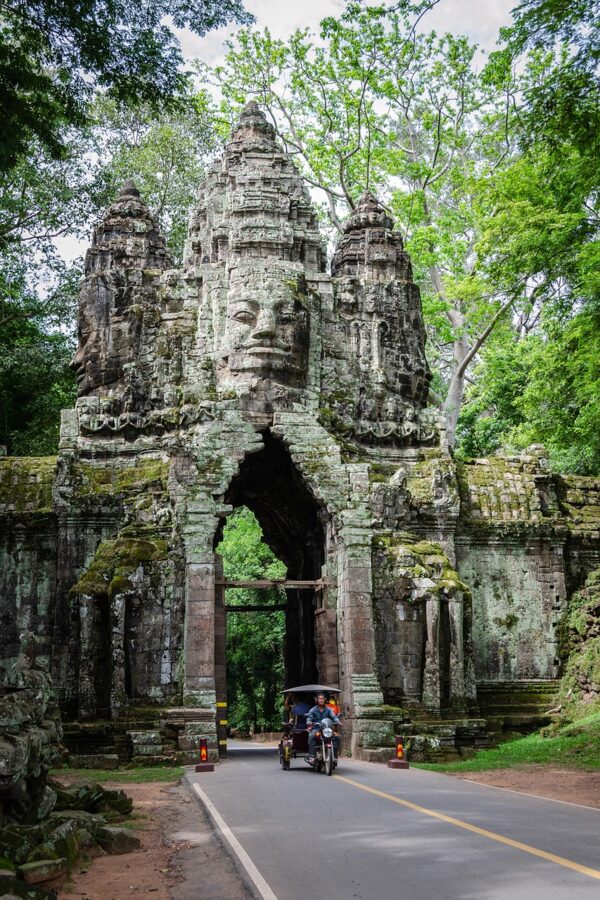
Eat at the stalls opposite the entrance and be at the South Gate of Angkor Thom by 7am. Angkor Thom was the walled capital rebuilt by Jayavarman VII from the late 12th century, a square about 3 km on each side.

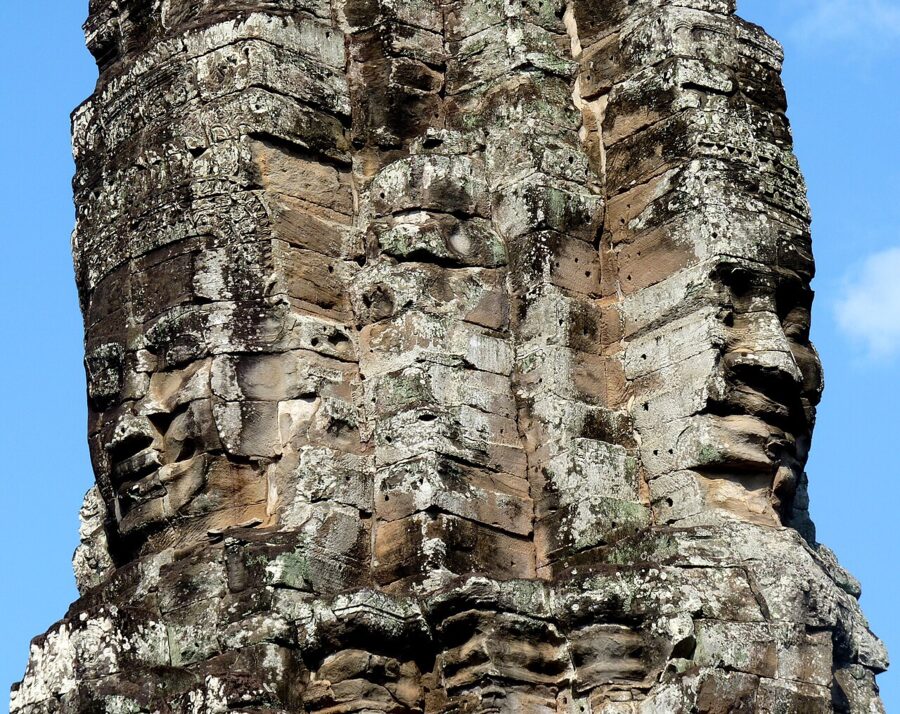
Go straight to the Bayon. The faces on its towers number around two hundred, and nobody agrees on whose they are: the bodhisattva Avalokiteshvara, Jayavarman VII himself, or both at once. The Japanese team that has worked here with APSARA for decades has done much to stabilise it. Be on the upper terrace before 8.30am, when the groups arrive.

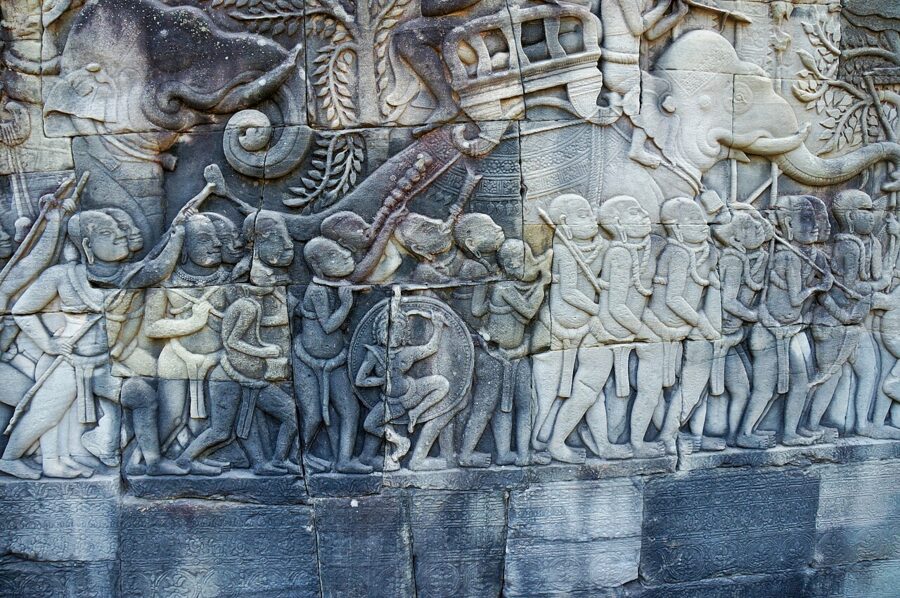
Then walk the outer gallery, whose reliefs show markets, cockfights, a man cooking rice and the naval battle against the Cham on the Tonle Sap (east gallery, south wing). Look under the war boats for the fish and crocodiles eating the fallen.

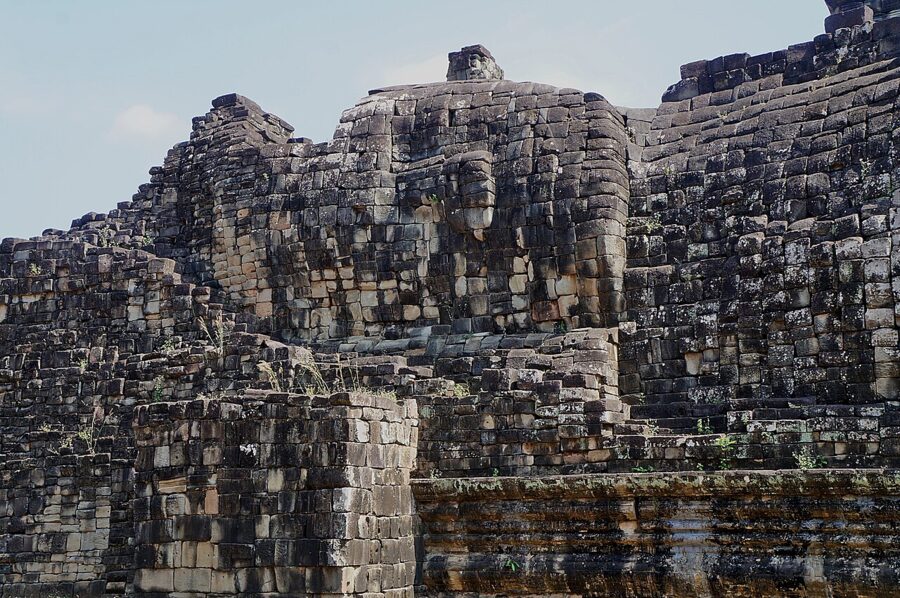
Walk on to the Baphuon, the mid-11th-century temple-mountain the EFEO took apart in the 1960s to rebuild its core. War stopped the work, much of the record of where each stone belonged was lost, and the reassembly restarted in 1995 under Pascal Royère was finished only in 2011. Step back on the west side: the whole face is a reclining Buddha, added centuries later.

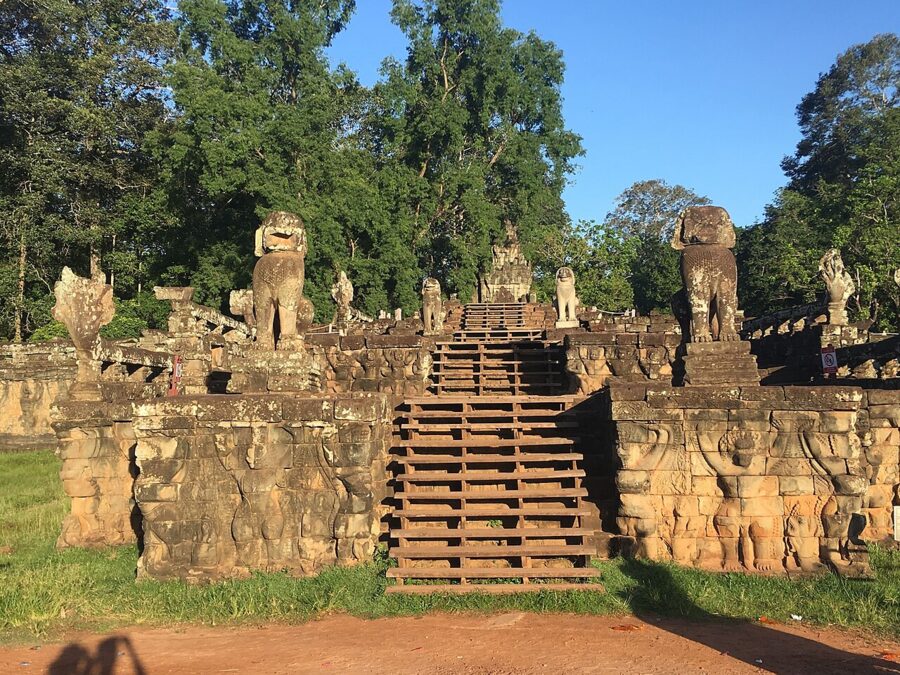
Past the Phimeanakas you come out on the Terrace of the Elephants, some 300 m of carved wall from which the king watched parades. At its north end, walk into the narrow corridor inside the Terrace of the Leper King: the inner wall was buried by a later rebuilding, and its carvings are crisp.

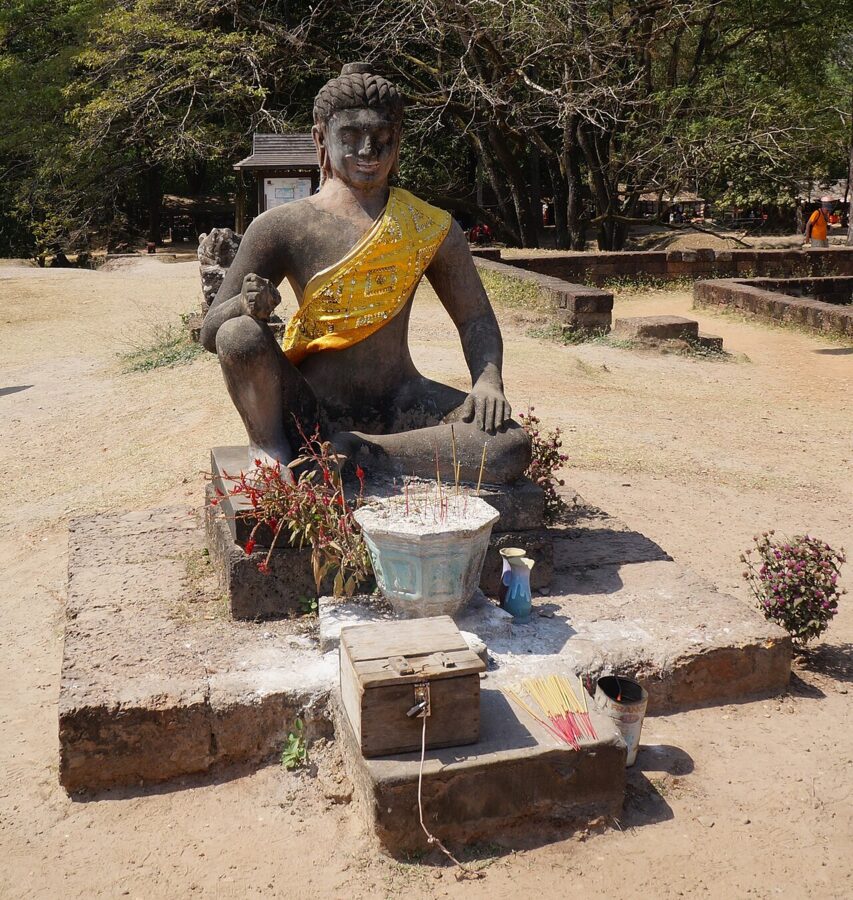

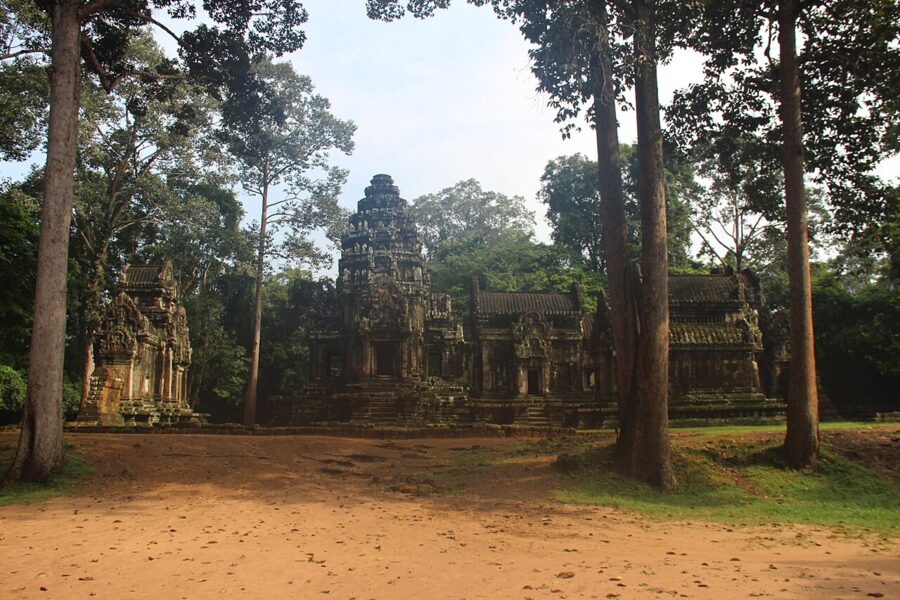
Leave by the Victory Gate. Just outside, Thommanon and Chau Say Tevoda face each other across the road, two small early 12th-century temples worth twenty minutes. Be back in town by 11.30am.
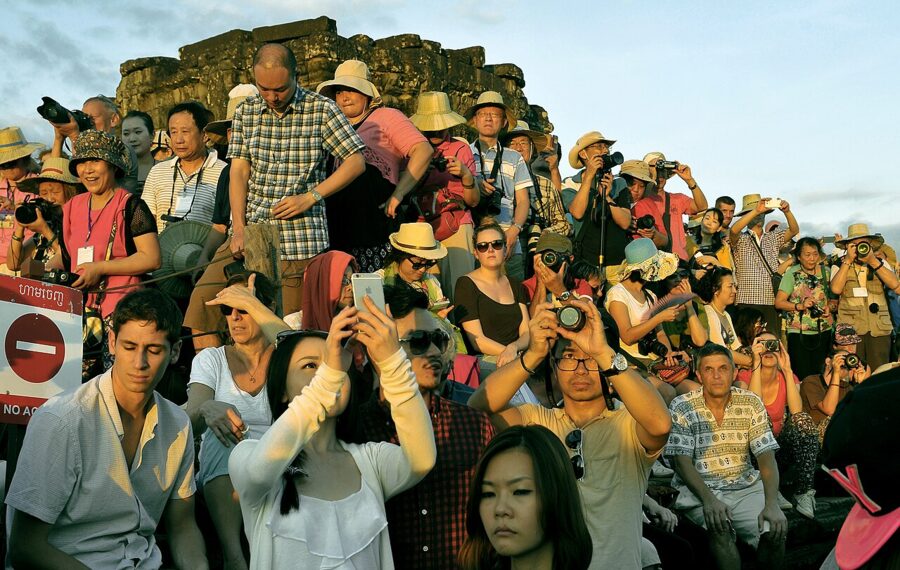
In the late afternoon, go up Phnom Bakheng, the centre of Yasovarman I’s capital around 900. Only 300 people are allowed on the summit at once, and on busy days the quota fills early, so queue by about 3.30pm.

Day 3: Ta Prohm and the Grand Circuit
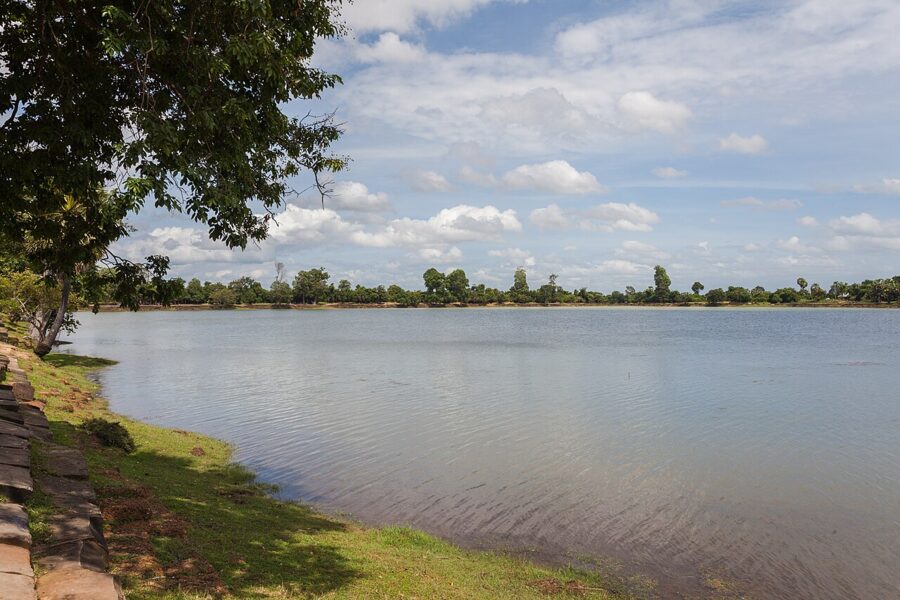
Start at Srah Srang, the reservoir east of Angkor Wat, which opens at 5am. Few people come here for sunrise, and the sun lifts over the water straight in front of the landing terrace.

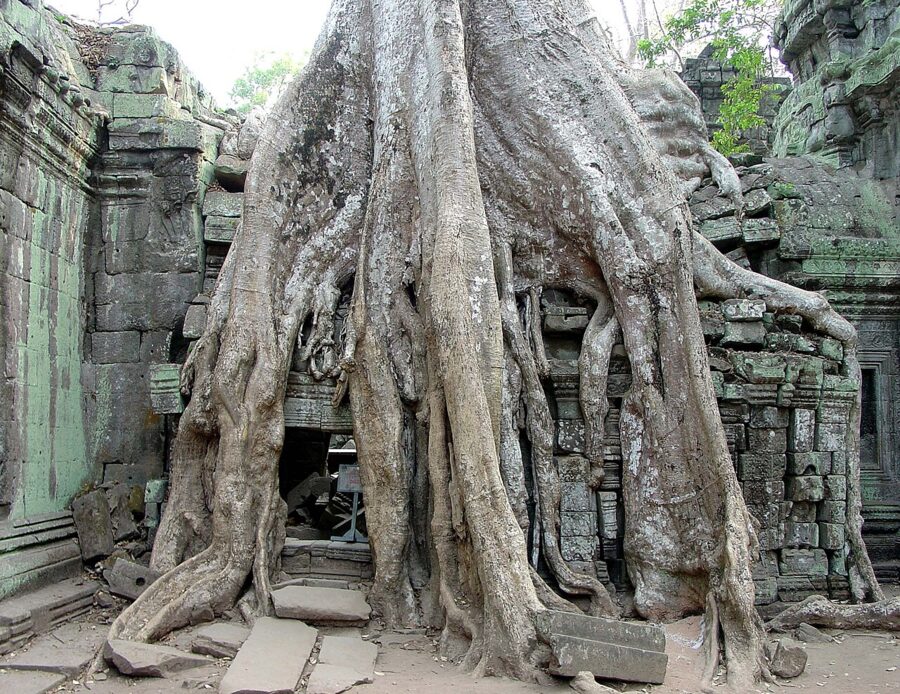
Ta Prohm is five minutes away and opens at about 6am. Jayavarman VII founded it in 1186 for his mother. Enter from the west, the quieter side, and walk east against the flow that starts at about 8am. The Archaeological Survey of India, working with APSARA, has rebuilt the stone around the silk-cotton trees and strangler figs rather than removing them.
Across the road, Banteay Kdei is the same kind of temple with a fraction of the visitors. Look for the guardians cut into the walls beside the doorways.
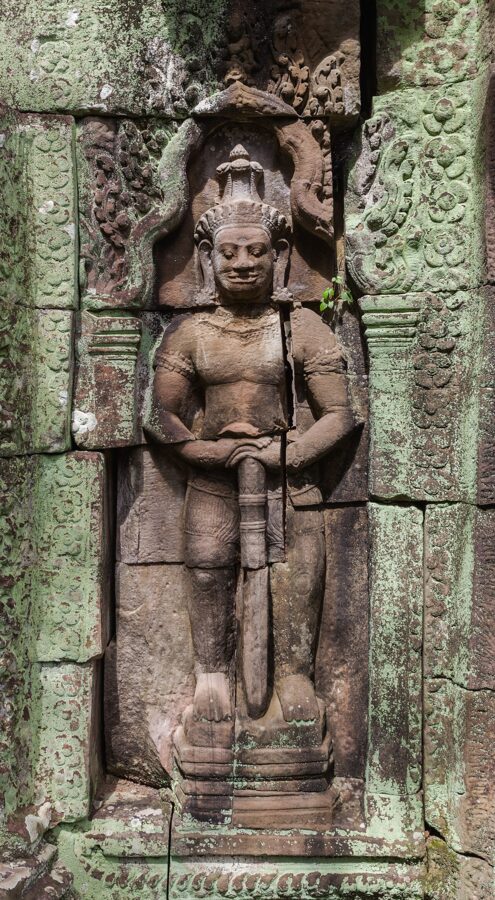

Rest from 11am to about 2pm. The Grand Circuit is then a clockwise loop through the north and east of the park, ending on a temple-mountain at sunset.
Preah Khan comes first, at about 2.30pm. Jayavarman VII dedicated it in 1191 to his father, and its corridors run along a single axis of doorways that shrink into the distance. Walk it east to west, with the low sun coming through the doors towards you.
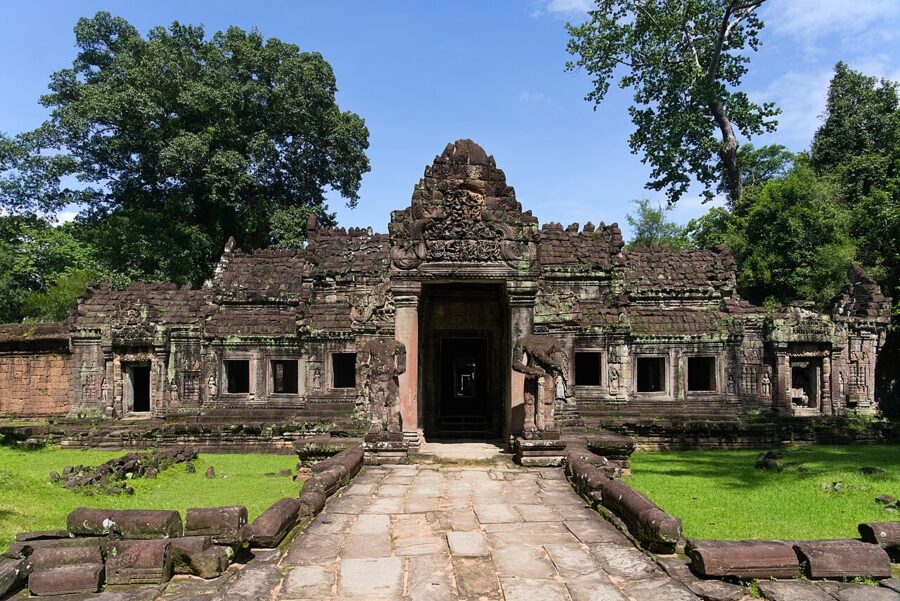

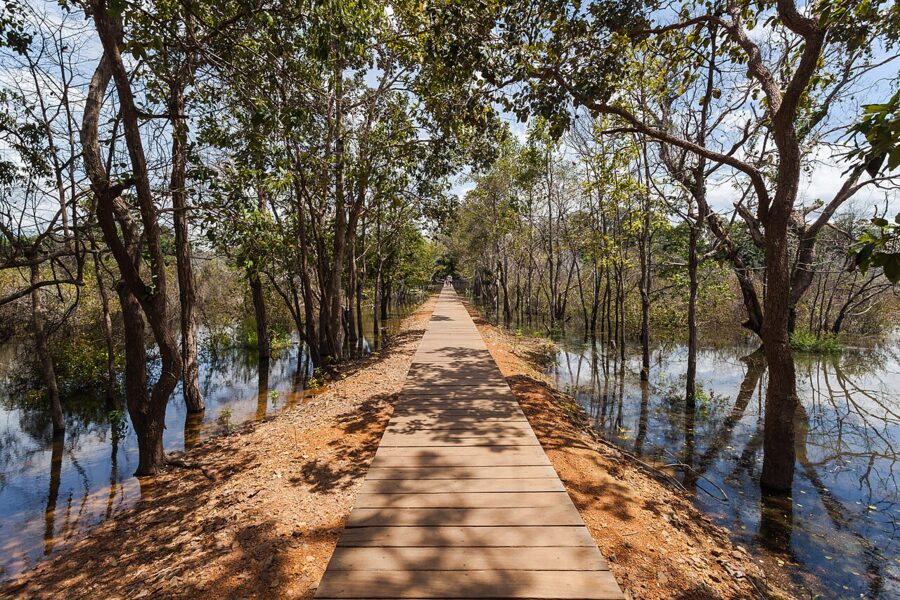
Neak Pean is a small shrine on an island in a reservoir, reached by a long boardwalk. Two coiled serpents give it its name, and its side pools were fed through spouts carved as a human head, a horse, a lion and an elephant; it is usually read as a place of healing.

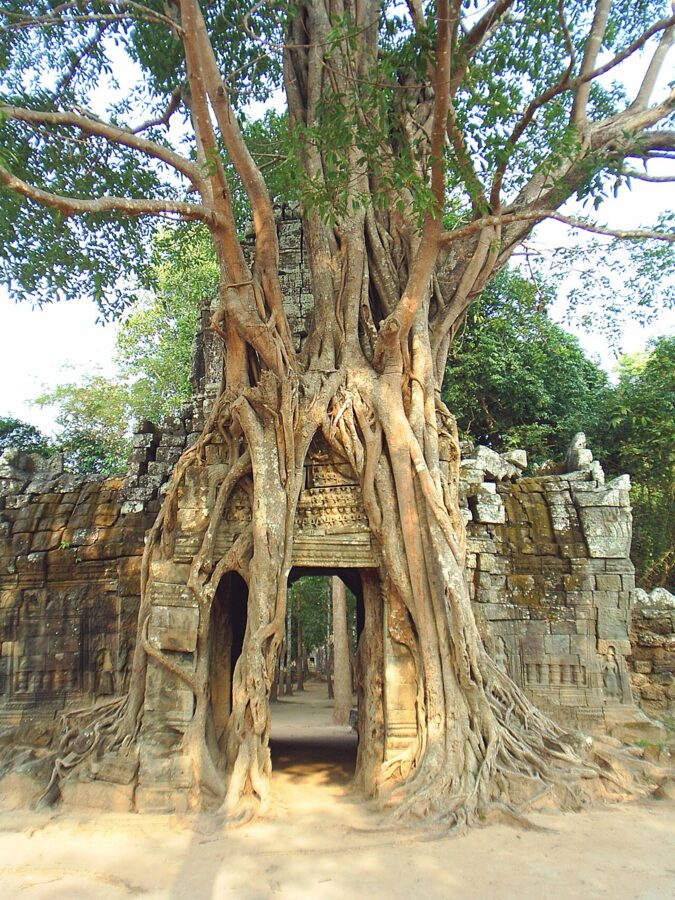
At Ta Som, walk straight through to the far side and look back. A fig tree has swallowed the eastern gateway.

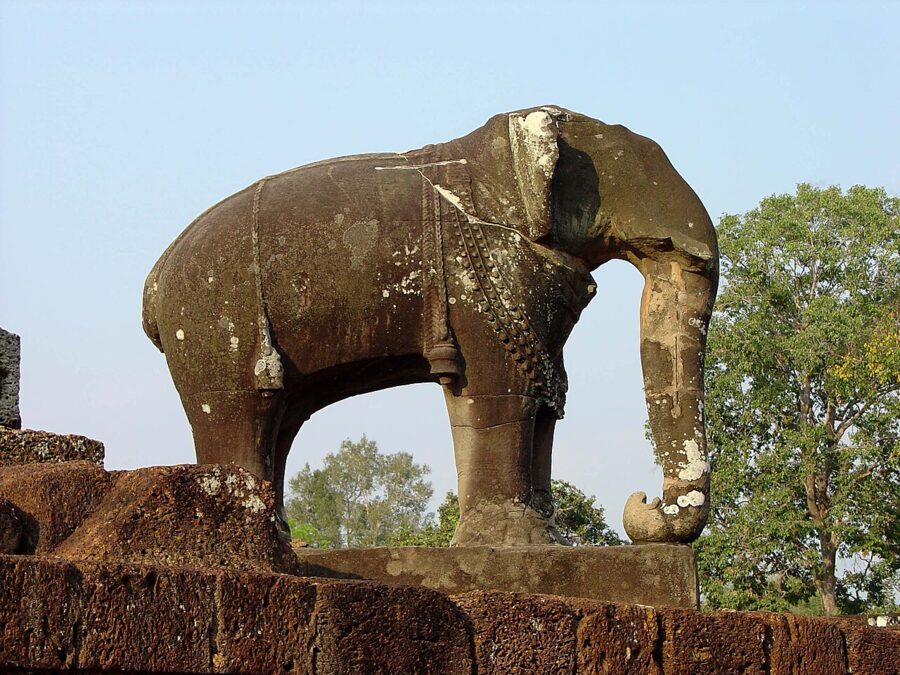
East Mebon was built by Rajendravarman in 953 on an island in the East Baray, a reservoir long since dried to rice fields. Look at the corners of the terraces, where stone elephants stand guard facing outwards.

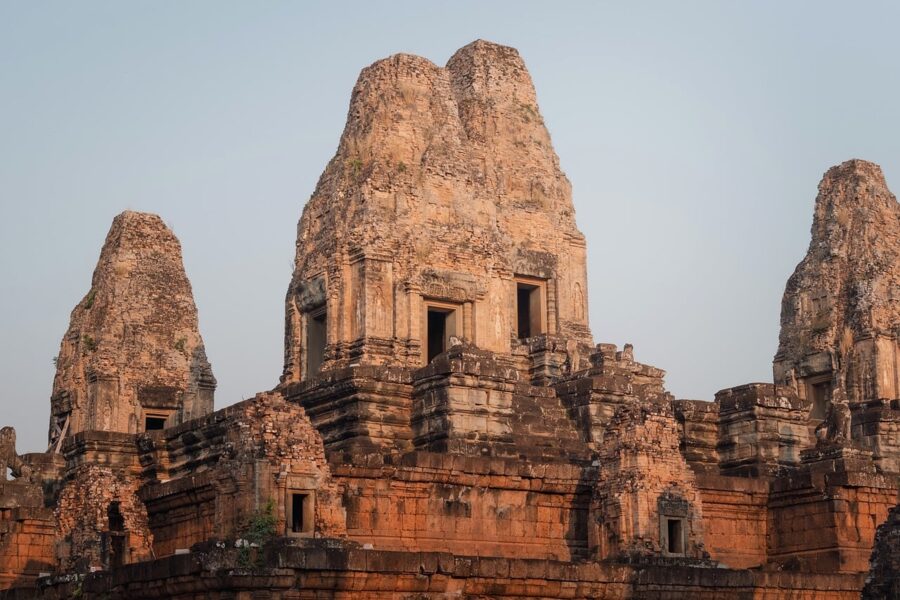
Finish at Pre Rup, which stays open until 7pm. The same king dedicated it in 961, a pyramid of brick and laterite that turns red in the last sun. Be on the top terrace by about 6pm; the guards clear it shortly before closing.

Day 4: Banteay Srei and Kbal Spean, or Phnom Kulen
Banteay Srei is covered by your pass, and with Kbal Spean beyond it they give you the finest carving at Angkor. Phnom Kulen is a separate ticket and a longer drive, but it is the mountain where the Khmer kingdom is said to have begun. For sculpture, choose the first; for forest, a waterfall and a living pilgrimage site, the second.
Banteay Srei and Kbal Spean
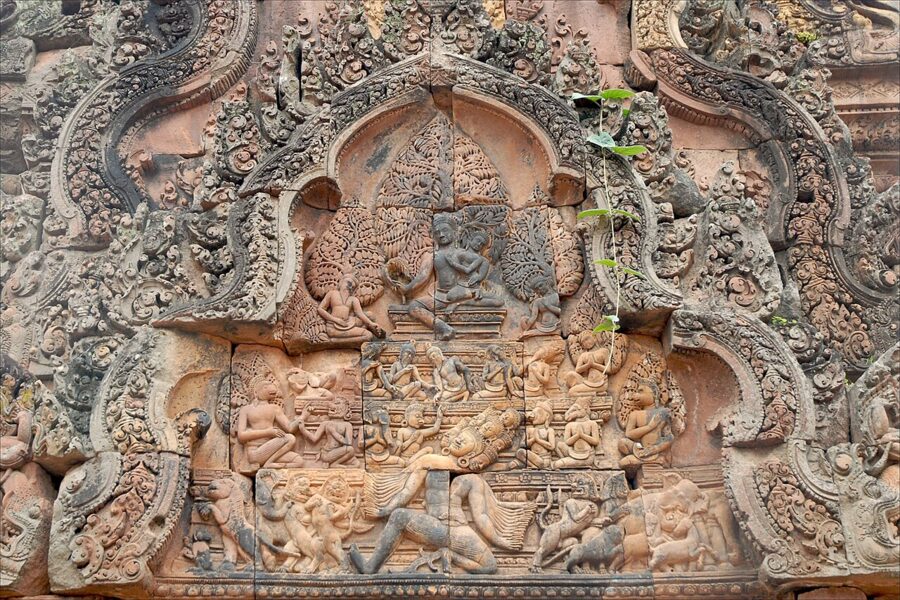
Leave town at about 6.15am. Banteay Srei is roughly 35 km (22 miles) north-east of Siem Reap, an hour by tuk-tuk, and the coaches arrive from about 8.30am. It was consecrated in 967 by Yajnavaraha, a Brahmin counsellor at court rather than a king, which may explain its small size and its delicacy.
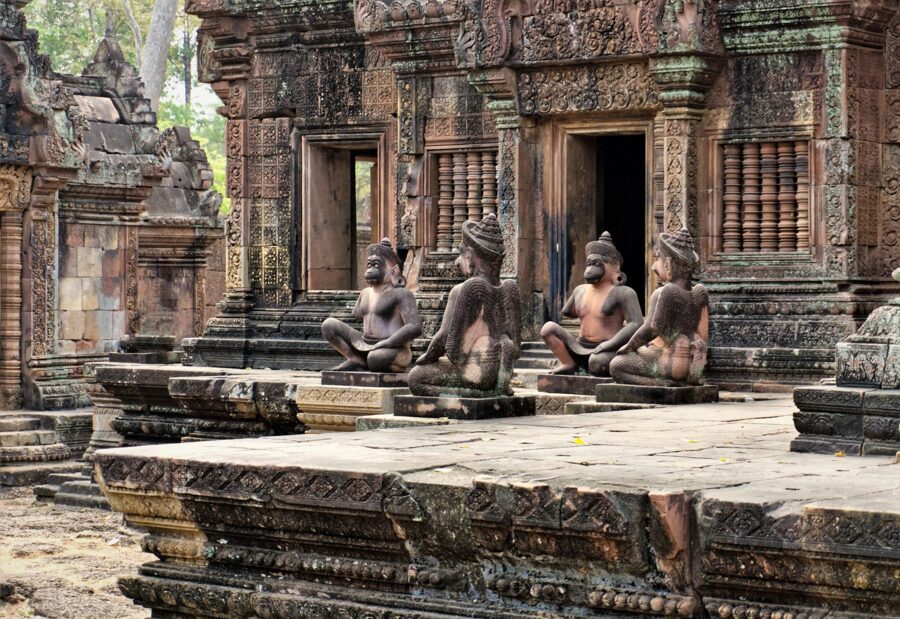
Look at the pediments of the two libraries: Ravana shaking Mount Kailasa, Kama shooting his arrow at Shiva, Krishna killing Kamsa. The central sanctuary is roped off, so the kneeling guardians before it are seen from a few metres away.
Kbal Spean is about 12 km further north, at the foot of the Kulen hills. The rocky path up through the forest is about 1.5 km and takes forty minutes to an hour. At the top, the bed of the Siem Reap River is carved for about 150 m with lingas, a reclining Vishnu, Brahma on his lotus and Shiva with Uma, mostly from the reign of Udayadityavarman II in the 11th century.
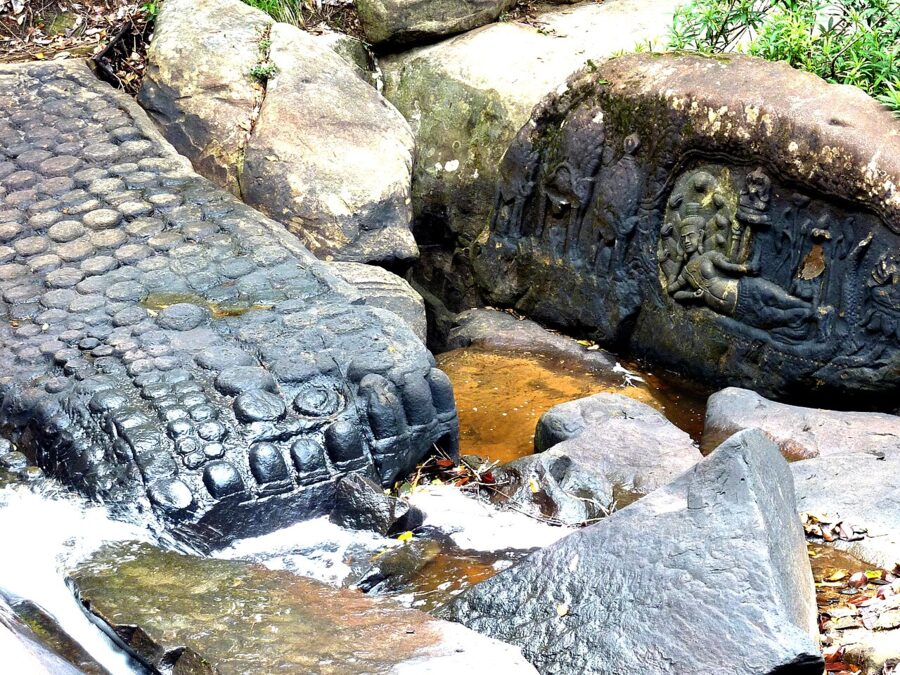

Climb by 9am, before the heat. Angkor Enterprise sells Kbal Spean as its own park ticket, US$5 as of November 2026; ask at the ticket office whether your Angkor Pass is accepted there before buying it. Eat at the trailhead stalls or near Banteay Srei on the way back, and be in town by 1.30pm.
Phnom Kulen instead
Phnom Kulen is about 50 km from Siem Reap. Here in 802 Jayavarman II was consecrated universal monarch, the event later inscriptions treat as the founding of the kingdom, and airborne laser surveys published in 2013 traced the city of Mahendraparvata under the forest. Today it is a Cambodian pilgrimage site and weekend picnic place.
Kulen is not in the Angkor Pass. Foreigners paid US$20 a person as of October 2026, collected at the foot of the mountain, and the road is one-way: up between about 7am and 11am, down from about 11.45am. Leave Siem Reap by 8am, and go midweek.
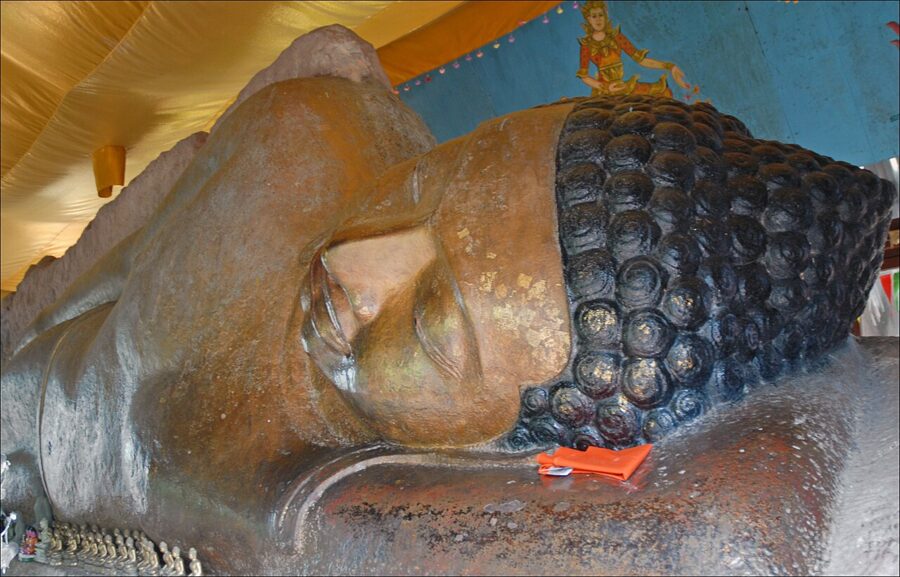

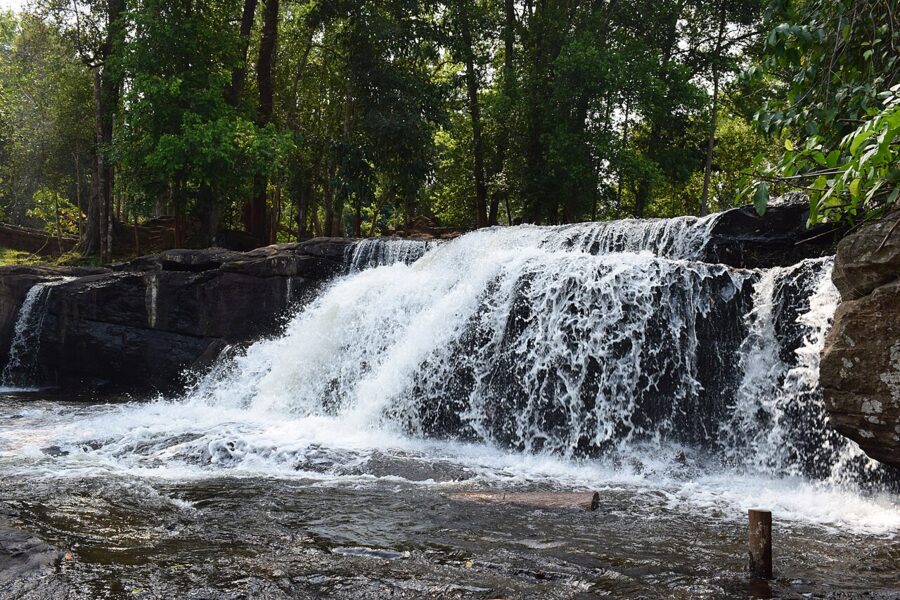
See the pagoda of Preah Ang Thom first, then the riverbed of a thousand lingas, then the waterfall, where you can swim; the ticket covers all three. I would not try to fit Kulen and Banteay Srei into one day, as the road timing makes it a rush.

Day 5: the Roluos group and the Tonle Sap
Roluos, the first capital
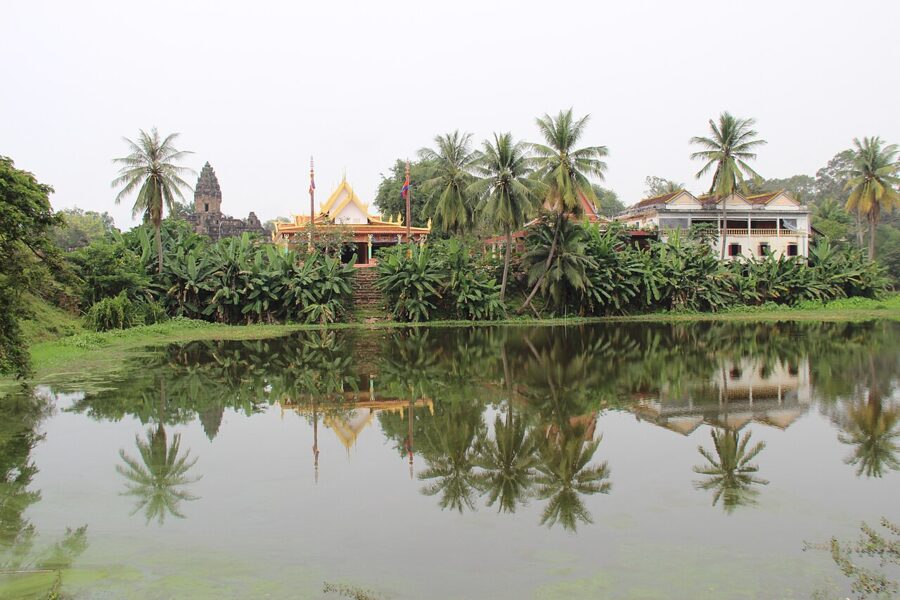
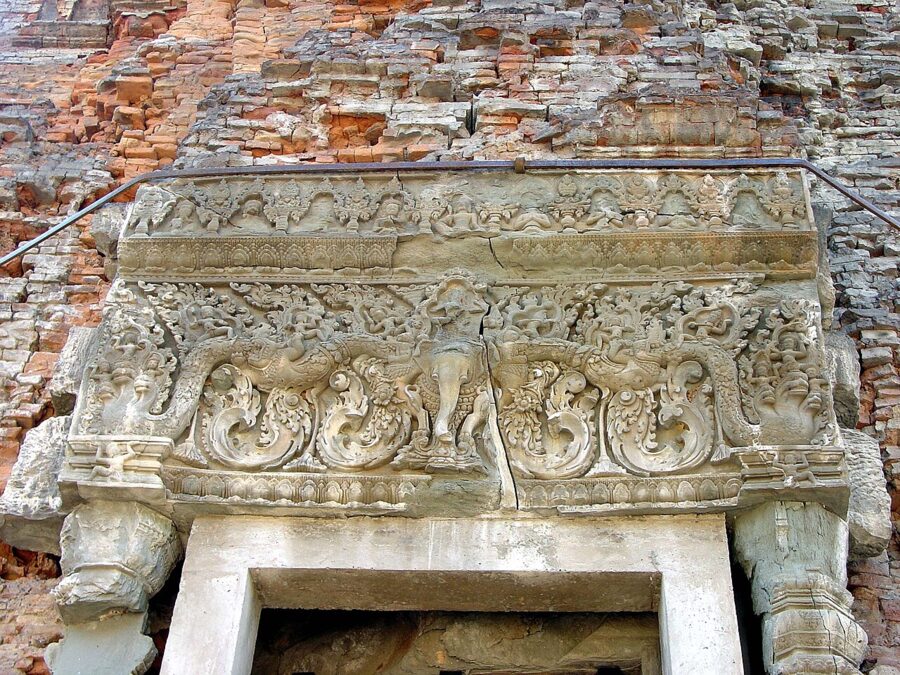
The Roluos group, about 13 km south-east of Siem Reap on National Road 6, is what remains of Hariharalaya, the capital before Angkor. Go at 6.30am, and see the three temples in date order.
Preah Ko has six brick towers raised by Indravarman I for his ancestors and dedicated in 879 (some sources give 880). Look for the stucco still clinging to the brick, and for the lintels.
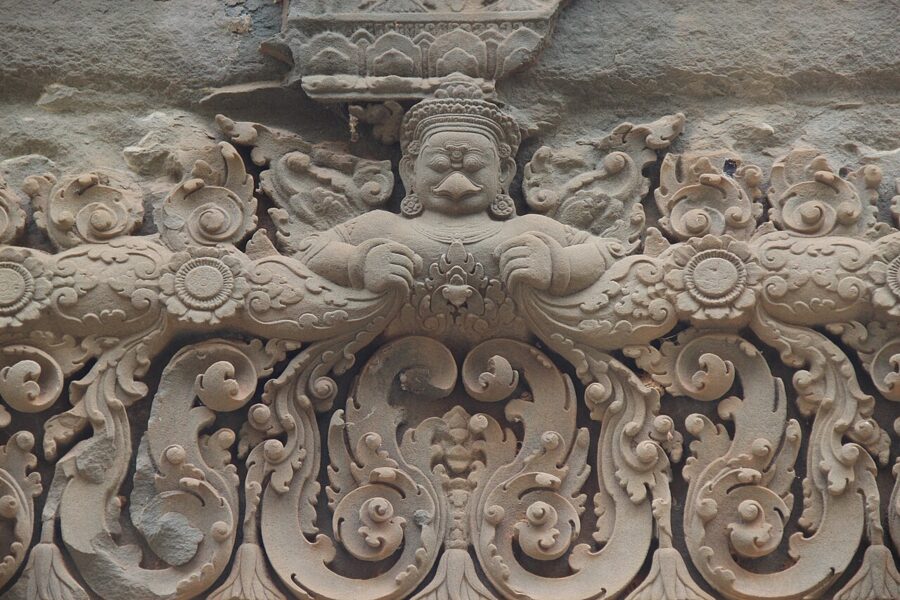
Bakong, consecrated in 881, is the first great sandstone temple-mountain, the model for the ones that followed. Lolei, built by Yasovarman I in 893, stood on an island in the Indratataka reservoir, now farmland.

Which lake village
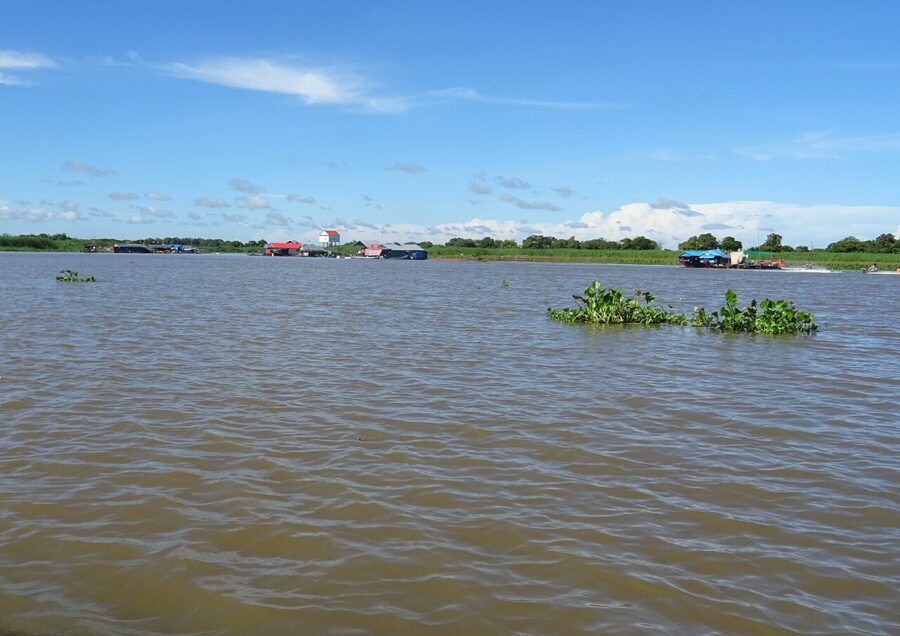
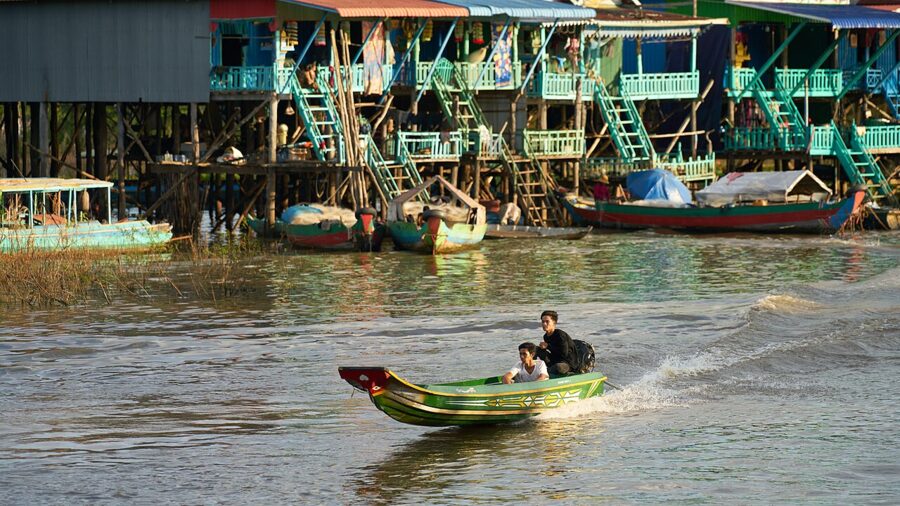
The Tonle Sap swells from roughly 2,500 to 3,000 km² in April to as much as 16,000 km² in October, so a village in deep water in October can be on mud in May. None of the villages is covered by the Angkor Pass. Ask whether a price is per person or per boat before you pay.
| Village | From Siem Reap | Boat (as of November 2026) | Best for |
|---|---|---|---|
| Kampong Phluk | about 1 hour | US$20 a person plus US$2 community fee; paddle boat US$5 (August to January) | Stilt houses and flooded forest |
| Chong Kneas | 15 km, 25 minutes | US$28 a boat for up to 5, US$38 for up to 8, at the Angkor Enterprise counter at the pier | The nearest floating village |
| Mechrey | about 30 minutes | US$19 a boat for up to 8, plus US$2 a person | A quieter floating village |
| Kampong Khleang | 50–55 km, 75–90 minutes | US$20–25 a person reported | The largest, least visited |
Kampong Phluk is the natural choice from Roluos, on the same side of town, and in high water you can switch to a paddle boat in the flooded forest. In the dry months its stilts stand 6 to 9 m clear of the ground.

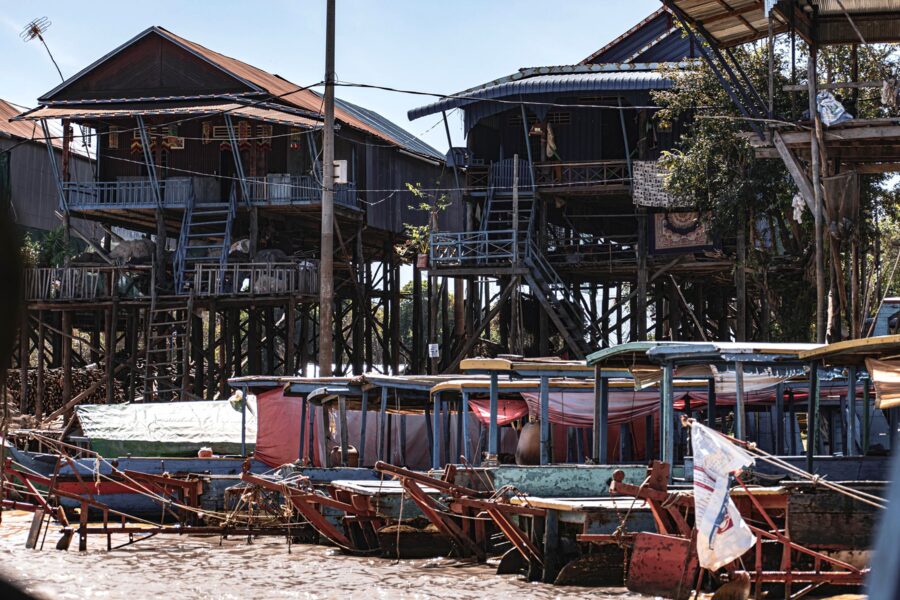
Chong Kneas has the worst reputation, and has earned it. The traps are a floating shop where you are urged to buy rice for a school (it is sold back and resold), a “crocodile farm” that is a souvenir counter with a pen attached, donation requests on the boat, and boats sold through drivers away from the counter. Buy your own ticket at the official counter and say no to the extras.
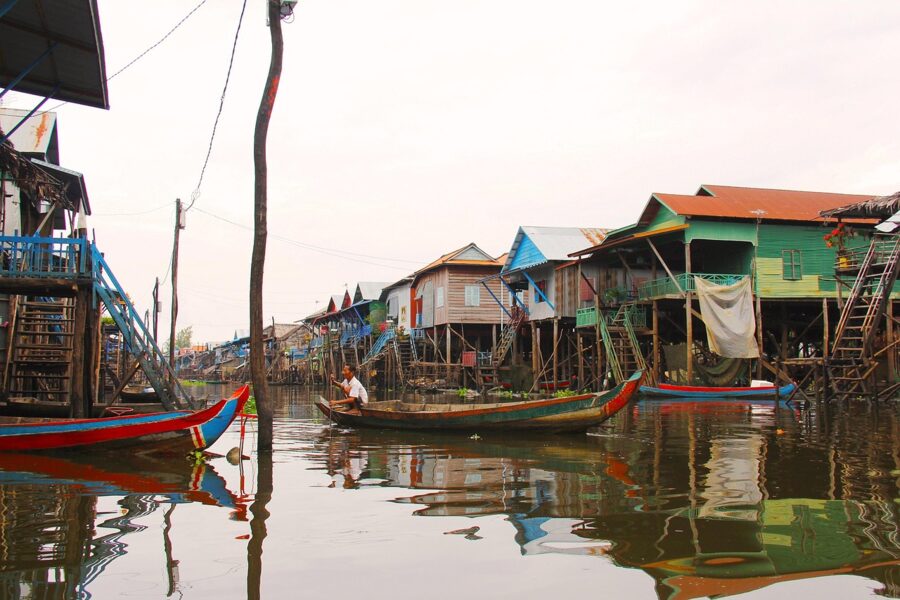
Angkor Enterprise suggests leaving Chong Kneas between 4.30pm and 5.15pm for sunset on the lake, a good last stop if you fly next morning. If you leave on the evening of day 5, Kampong Phluk at midday is the easier plan.
Midday: where to eat and rest
The most useful habit at Angkor is to stop between about 11.30am and 2.30pm, when the stone holds the heat, the light is flat and the crowds peak. In the park, the rows of food stalls opposite Angkor Wat’s west entrance and across from Srah Srang serve rice and noodle dishes, coconuts and cold drinks, priced in dollars with change in riel at about 4,000 to the dollar. There are similar stalls at Banteay Srei, the Kbal Spean trailhead and the top of Phnom Kulen.
The better answer for most people is a hotel with a pool. Town is fifteen to twenty minutes from the Small Circuit, and a swim and a nap at midday are what make the sunset half of each day possible.
Practicalities
Heat and timing
November to February is cool, dry and busiest. From March to May the heat builds, with April often reaching 35°C (95°F) or more. The wet season, roughly June to October, brings afternoon storms, green moats and the fewest visitors; wait out a downpour under a gallery roof.
Most temples open from about 6am to 6.30pm; Angkor Wat and Srah Srang open at 5am, and Pre Rup and Phnom Bakheng stay open until 7pm (as reported in late 2026). Times change now and then, so check with your driver before an early start.
Dress and the upper level
The Angkor visitor code of conduct rules out shorts and skirts above the knee and bare shoulders in sacred places, and at the Bakan it is enforced; a scarf over a vest does not count. It also asks you not to touch carvings, sit on fragile structures or climb loose stones, to ask monks before photographing them, and for women not to touch them or sit close to them. Angkor has been smoke-free since 2012.
Water and toilets
Carry at least two litres each and buy more at the car parks, and eat something salty at midday. There are toilets at the main temples and the larger car parks; carry tissues.
Guides
You do not need a guide, but a good one reads the reliefs with you. Guides are trained and licensed by the Ministry of Tourism, and around three thousand hold an Angkor licence. Book through your hotel or a known agency, ask to see the licence, and use the guide for Angkor Wat and the Bayon.
Drones
APSARA has banned drones over the park without prior permission since November 2016, and unauthorised flights are a police matter. Leave the drone in the hotel.
Is it safe?
Siem Reap and the temples are relaxed, and the main risks are heat, steep steps and town traffic. The 2025 clashes between Cambodia and Thailand were along the border, well away from the park. Check your government’s travel advice if you plan to continue towards the border provinces.
A faster three, a slower five, and with children
Three days
With a 3-day pass (US$62, three days within seven): day one, Angkor Wat at sunrise, the Bayon and Angkor Thom, then Angkor Wat’s galleries late in the day. Day two, Ta Prohm at opening and Banteay Kdei, then the Grand Circuit to Pre Rup. Day three, Banteay Srei early, with Kbal Spean if you like walking or Roluos on the way back if not.
A slower five days
If dawn starts are hard, do one area a day and skip the sunrises: Angkor Wat in the afternoon, Angkor Thom from 7am to 11am, Ta Prohm and Srah Srang, Banteay Srei with Banteay Samre on the way home, then Roluos and Kampong Phluk. The 7-day pass leaves room for a sixth day at Preah Khan and Neak Pean. If the trip goes on to the coast, Kbal Chhay waterfall near Sihanoukville is a gentle end to the week.
With children
Children under 12 go in free with a passport but are not allowed up the Bakan, so plan for one adult to stay below. Ta Prohm, the Bayon faces, the Neak Pean boardwalk and the Kampong Phluk boats tend to be the hits; long relief galleries and the steep climbs of Pre Rup and Ta Keo less so. Keep mornings short and put the pool at the centre of each day.
Whichever version you choose, keep one late afternoon for Angkor Wat’s west front, standing beyond the moat as the sun goes down behind you. It is the temple you saw in silhouette at dawn, lit from the other side.